WhatsApp For More
+6 (012) - 524 8258
WhatsApp For More
+6 (012) - 524 8258

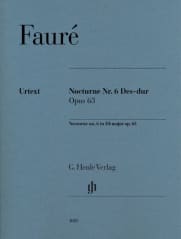
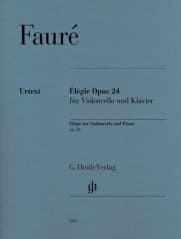
Henle Urtext (blue covers) and Horizons (orange covers) are companion series from G. Henle Verlag, sharing the same high production standards while serving distinct purposes.
The classic Urtext editions remain the gold standard for the core classical repertoire. They present a scholarly reconstruction of the composer’s intentions, drawn from primary sources (autographs, authorised copies, early prints). Editorial additions are minimal and clearly marked; the focus is fidelity to the original text for performance and study of the foundational works.
Horizons, launched in autumn 2026, expands the catalogue in three directions:
Discoveries – lesser-known or rediscovered pieces that enrich the repertoire
Arrangements – well-known works adapted for alternative scorings (for example, Brahms’s Hungarian Dances arranged for violin and piano by Joseph Joachim)
Studies and pedagogical material – orchestral excerpts for audition preparation and teaching-oriented publications
Horizons is not an Urtext series in the strict sense; it is a complementary imprint. The musical texts are still thoroughly researched and prepared to Henle’s exacting standards of engraving, paper, layout and binding, and are designed for practical music-making. The series begins with piano, strings and string chamber music, with further instruments to follow.
In short, blue covers deliver the authoritative original texts of the standard repertoire; orange covers open new horizons through arrangements, rediscoveries and practical studies—both carrying the familiar Henle quality that musicians have trusted for more than 75 years.
Local & International
Malaysia & Indonesia
Exam Syllabus Pieces
Call us : +6 (012) - 524 8258

During the last few decades, most cultural critics have come to agree that the division between "high" and "low" art is an artificial one, that Beethoven's Ninth and "Blue Suede Shoes" are equally valuable as cultural texts. In Who Needs Classical Music?, Julian Johnson challenges these assumptions about the relativism of cultural judgements. The author maintains that music is more than just "a matter of taste": while some music provides entertainment, or serves as background noise, other music claims to function as art. This book considers the value of classical music in contemporary society, arguing that it remains distinctive because it works in quite different ways to most of the other music that surrounds us.