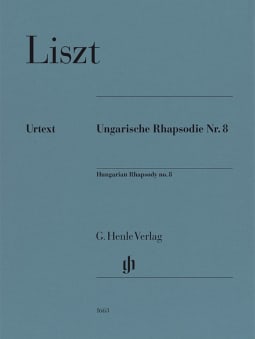
Description
The seventh Hungarian Rhapsody, published in 1853, is founded on three motifs from Hungarian folk music: a traditional instrumental tune and two rural songs. Here we discover all the classic features of the “style hongrois,” including tempo variations, elaborate ornamentation, augmented-second suspensions, and distinctly dotted rhythms. Nonetheless, the rhapsody, possessing a fairly moderate degree of difficulty, demands various expressive and formative skills in the Lento introduction alongside strength and stamina in the Vivace section. Throughout Liszt's lifetime, the Rhapsody was released in different versions, with the sources being thoroughly examined for the first time in the new Henle Urtext edition. In addition, two distinguished Liszt specialists participated in the edition: Mária Eckhardt authored the preface, while Vincenzo Maltempo provided the fingerings.