Description
Cordoba from Opus number 232, arranged for Piano solo.

WhatsApp For More
+6 (012) - 524 8258

Cordoba from Opus number 232, arranged for Piano solo.

Albéniz, the Catalan composer, wrote his six-piece piano suite "España" at the age of 30 while living in London. His virtuosic piano recitals there were causing a sensation. At these concerts, he often performed his own compositions, which were infused with the vibrant flair of his Spanish homeland. Notably, Albéniz gave the premiere performance of the full "España" piano cycle in London, transporting his audience on a journey through the Spanish countryside. The suite features exotic dance rhythms like the "Zortzico" as well as lyrical folk melodies in the "Serenata," all preceded by the famous "Tango" that has since become widely arranged.

Spanish music with a universal touch" - this was the goal that Isaac Albéniz set out to achieve, and he realized that vision to perfection in his Iberia Suite. Now, all four "books" of this late-Romantic masterpiece will be published in an urtext edition that does justice to the work, with a high-quality appearance and engraving.

The acclaimed Henle Urtext edition of the first book in Albéniz's four-part "Iberia" cycle has already been published, whetting the appetite of many pianists for the remaining volumes. The second book in this collection of melodious Spanish portraits is now available. In "Rondeña," "Almería," and "Triana," Albéniz seamlessly blends his mastery of European classical music with elements of Spanish folk tradition, reinventing the latter in an authentic and captivating manner. The rhythmic vitality and vibrant colors of these pieces are sure to delight both performers and listeners.

The first two volumes of "Iberia" by Isaac Albéniz, published as Urtext editions by G. Henle Publishers, have become a staple in the repertoire of pianists worldwide. Now, the highly anticipated third book in the series has arrived, once again showcasing Albéniz's masterful blend of European classical tradition and Spanish folk influences.

The release of the fourth and final book completes our blue Urtext editions of Albéniz's "Iberia" cycle. Despite being gravely ill, Albéniz persevered to fulfill his promise of twelve pieces to his friend, the pianist Joaquin. After the sensuous dance rhythms of "Málaga" and the cheerful, lively "Eritaña," Albéniz created a striking musical portrait of the renowned Spanish wine region of "Jerez." Claude Debussy himself praised this late Romantic masterpiece, declaring that "Music has never achieved such a diverse and colourful form.
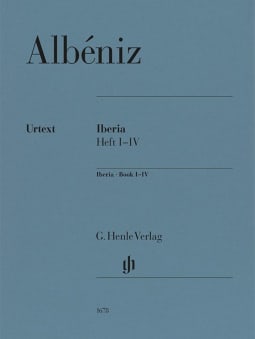
Isaac Albéniz envisioned his "Iberia Suite" as a blend of Spanish music infused with a universal essence. He masterfully achieved this vibrant piano cycle, despite facing significant health challenges that made its completion arduous. Claude Debussy praised "Iberia," remarking on the overwhelming creativity present in the music. However, the experience of this late-Romantic work extends beyond mere auditory appreciation; it demands attention when placed on the music stand, as the technical demands increase with each page. Musicians eager to immerse themselves in Albéniz's rhythmic intricacies, vivid soundscapes, and the rich tapestry of Spanish folk influences interwoven with European classical traditions will find this edition, which compiles all four books in Henle Urtext quality, to be a rewarding pursuit.


Isaac Albéniz's transcription of his "Mallorca" for guitar became far more popular than the original piano version. He likely composed this tender, dreamlike "barcarolle" during his second trip to Mallorca in May 1890, remaining true to his penchant for depicting regions of his homeland through music. Albéniz's friend and patron Enrique Granados was said to have movingly performed "Mallorca" at the composer's deathbed. Today, pianists can play this sophisticated work in a superbly engraved Henle edition that faithfully presents the original musical text.


