
Description
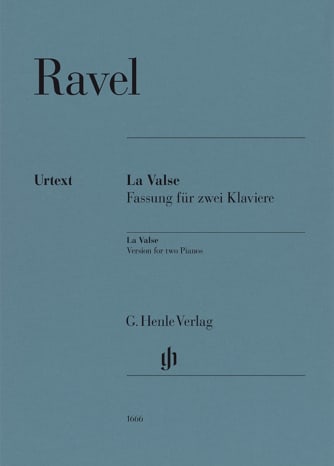
In 1906, Ravel, inspired by the renowned "Waltz King" Johann Strauss, envisioned a waltz composition, but the realization of this idea was delayed due to other commitments and the onset of World War I. It wasn't until he received a ballet commission in 1919 that he revisited this concept, ultimately creating what he described as an "apotheosis of the Viennese waltz." Initially met with lukewarm responses, the orchestral piece, known as the "Poème chorégraphique," has since become a staple in classical music. The work's development was distinctive, as Ravel simultaneously crafted two piano arrangements alongside the orchestral score. The solo piano and two-piano versions are not mere drafts or reductions of the orchestral piece; rather, they stand as independent musical interpretations that Ravel published. In these charming piano renditions, the composition's structure, articulation, and clarity are even more pronounced than in the orchestral version, showcasing Ravel's exceptional skill. This provides a compelling reason to present these two piano versions for the first time in Urtext editions, meticulously prepared from authentic sources.


